Using cookies on shellauction.net:
Shellauction uses cookies only for technical reasons and to facilitate and speed up your site navigation.
By continuing to browse, you accept the use of cookies;
if you do not wish to receive them please disable them or not navigate this website further. More info Cookies on shellauction.net
COOKIE INFORMATIONS
Using cookies on shellauction.net:
Shellauction uses cookies only for technical reasons and to facilitate and speed up your site navigation.
By continuing to browse, you accept the use of cookies;
if you do not wish to receive them please disable them or not navigate this website further.
More info Cookies on shellauction.net
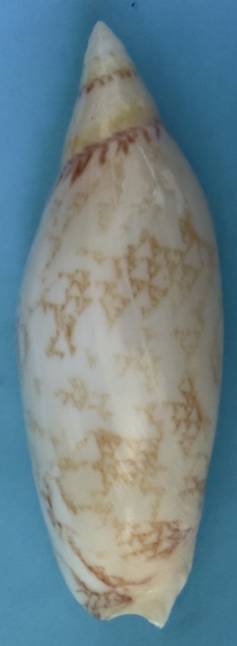
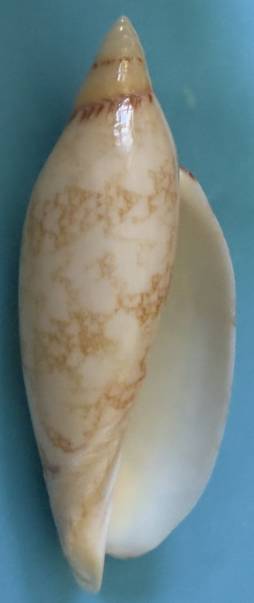
One of the largest Amoria keatsiana I’ve handled (scientifically known as Amoria damonii keatsiana) & is a highly sought-after, rare form of Damon's volute, belonging to the predatory sea snail family Volutidae. First described by N.H. Ludbrook in 1953, it is primarily found in the tropical waters of the Arafura Sea, Northern Territory, and Indonesia.Taxonomic StandingWhile initially described as a distinct species (Amoria keatsiana), modern malacologists and taxonomic databases, like the World Register of Marine Species, classify it as a synonym or local form of the widespread Amoria damonii damonii.Physical CharacteristicsAppearance: These sea snails are characterized by a smooth, solid, and lustrous shell featuring spaced dark axial lines against a pale background.Size: Shells typically measure from 65- 100 mm in length.Variability: The species Amoria damonii is highly polymorphic, meaning shell patterns vary greatly along a geographical cline (a gradient of changing features across their range). True keatsiana specimens are known for a specifically spaced line pattern.Habitat & CollectionDepth: These marine gastropods live in soft, sandy substrates and have been dredged or collected by divers at depths ranging from 10 m -150mDistribution: They are primarily endemic to the marine zones off the coast of Darwin, the Arafura Sea, and occasionally neighboring Indonesian waters.Rarity & MarketBecause of their specific color patterns, glossy finishes, and the difficulty of dredging them from deep waters, keatsiana forms are considered highly prized and rare finds among shell collectors. Specimens are only occasionally offered. This trawled in 250 metres could be close to WRS.